Six weaves, and
what tells them apart.
A shop this size cannot keep everything, so what it does keep says something. Here is what is on the shelves at the avenue, and how to recognise each one in the hand.
Tussar and ghicha
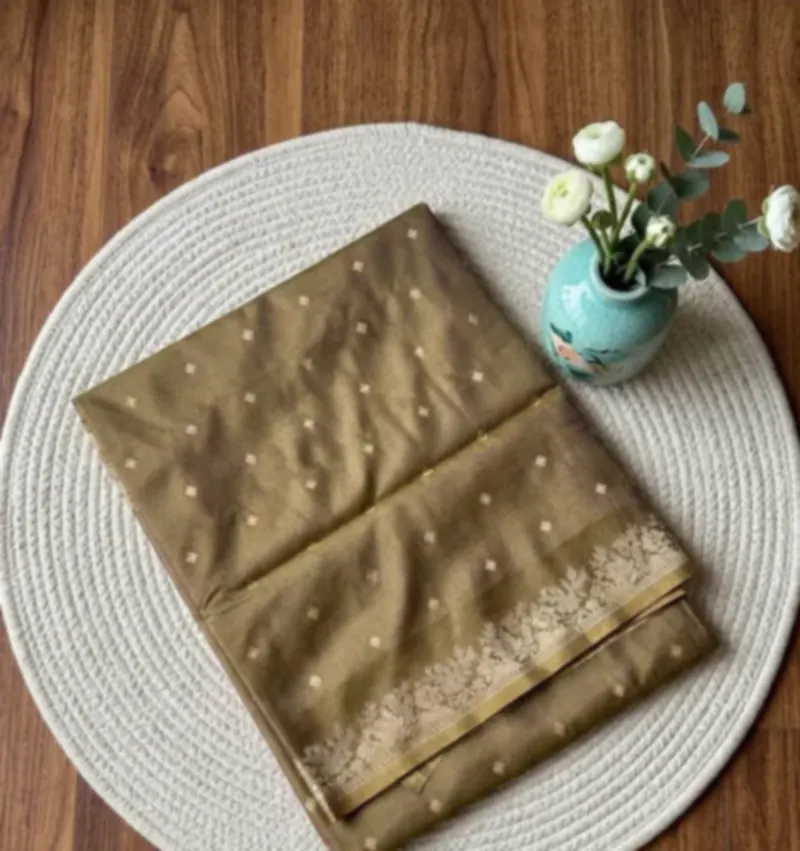
Tussar comes off wild silkworms rather than farmed ones, which is why it will never be as white or as even as mulberry silk. It arrives the colour of straw and it stays there unless somebody dyes it.
Ghicha is the more interesting half. When a cocoon is reeled, the long continuous filament comes off first. Ghicha is spun from what is left after that: the short, broken ends. The yarn that results is thick in places and thin in others, and the cloth woven from it has a grain you can feel with a thumb.
It is not a fault. It is the reason people ask for it.
Hand block print
This is the one Brishtidhara calls itself a specialist in, and it is the claim the shop makes in its own words before it makes any other.
A block print is a carved wooden block, inked and pressed down by hand, again and again along the length of the cloth. Ajrakh is the demanding version: the cloth goes through resist, dye and wash more than once, and each colour is a separate pass with a separate block. The registration has to hold every time, because a block that lands a few millimetres out is visible from across a room.
Look along a border at an angle. On a true hand print the repeat breathes slightly. It is never quite mechanical, and that is how you know.
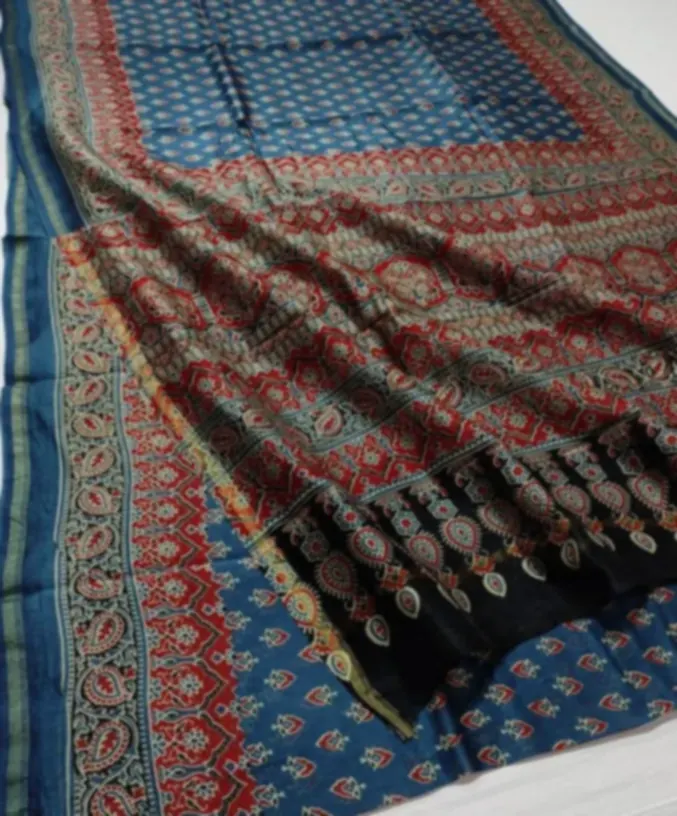
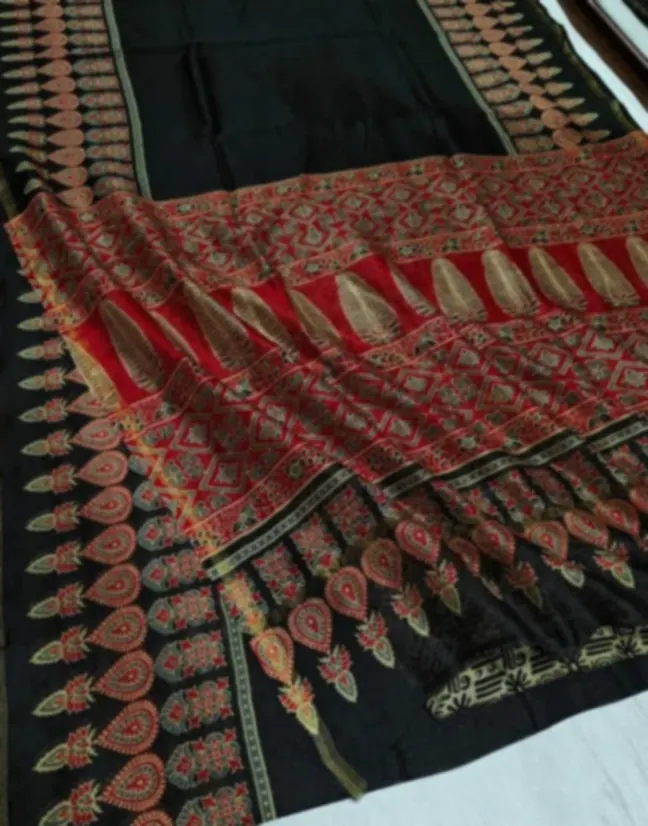
Every colour on a block print is a separate journey down the length of the cloth.
Kantha work
Kantha is Bengal’s own stitch, and it began as thrift: worn cotton saris layered and quilted together with a plain running stitch until they became a blanket.
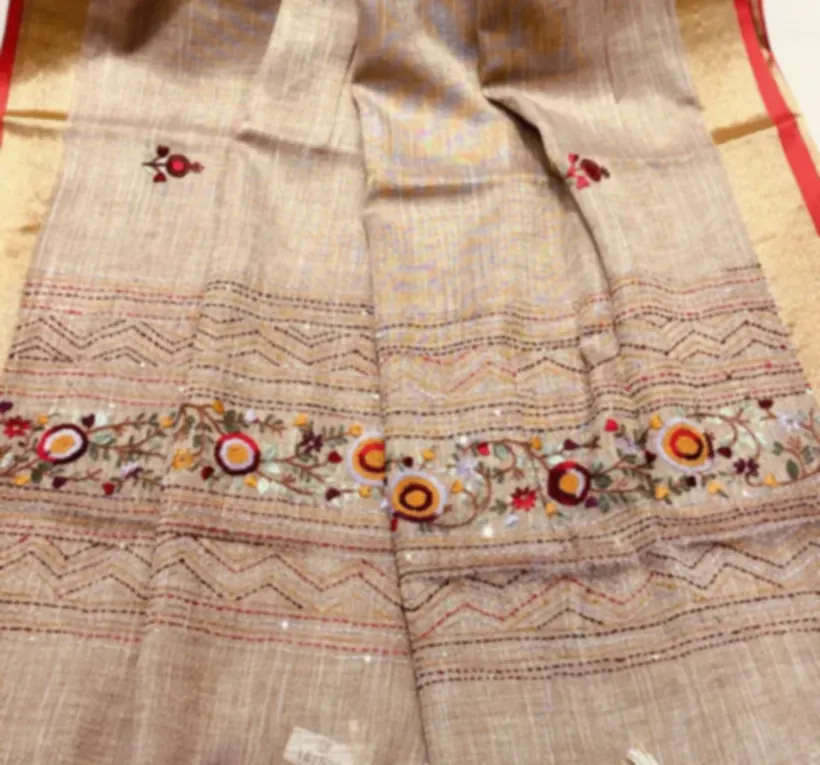
On a saree the stitch has moved from mending to drawing. Rows of it march across a tussar ground, turn into a flower, hold a small round mirror in place, and turn again. Nothing about it is quick, because a running stitch cannot be made any faster than one stitch at a time.
Zari brocade
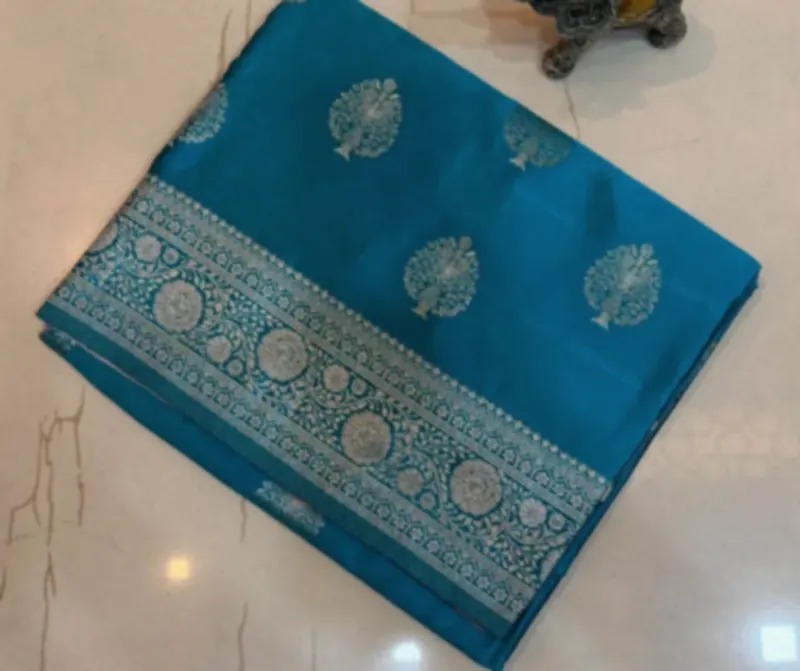
Zari is metallic thread carried through the weave by an extra weft, which means the pattern is built into the cloth rather than laid on top of it. Turn the saree over and you can read the whole design backwards.
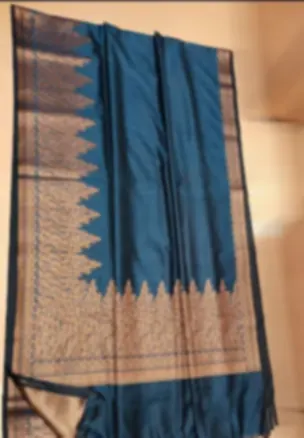
The grammar is always the same. Small motifs scattered at intervals across the body, a border running the full length, and then the aanchal, where the weaver stops rationing and puts everything into the last two feet. The aanchal is the part that goes over the shoulder, so it is the part everyone else actually sees.
Chanderi and tanchoi
Chanderi is woven so fine that a whole saree will pass through a bangle, and it holds a faint transparency that no other silk quite manages. Hold it to a window and the light comes through the ground while the brocade figures stay solid.
Tanchoi is a different trick. It uses several coloured wefts and floats them behind the cloth instead of cutting them, so the surface is dense with pattern and the back is smooth. Brishtidhara label their own pieces plainly, and two of them read Chanderi Tamarind and Chanderi Tanchoi.
Shawls
The word is in the name over the door, which tells you they were never an afterthought here.
Kolkata gets a short winter and it arrives without much warning, and then for a few weeks every year a shawl is the most useful thing anybody owns. The rest of the year they sit folded on the high shelf, waiting.
None of this reads
as well as it feels.
The shop is open six days a week and the cloth is on the shelf. Ring first if you are coming a long way.